Computer Vision · 2026
Ablation study on MNIST and CIFAR-10: 99.47% and 93.87% accuracy
Two ablation studies measuring how much each piece contributes to beating 99.4% on MNIST without convolutions and 92% on CIFAR-10.
- on MNIST with perceptrons only, no convolutions
- 99.47%
- on CIFAR-10 with a custom DenseNet-100
- 93.87%
- over the CIFAR-10 baseline
- +11.7 pts
- configurations compared in two ablations
- 11
Problem
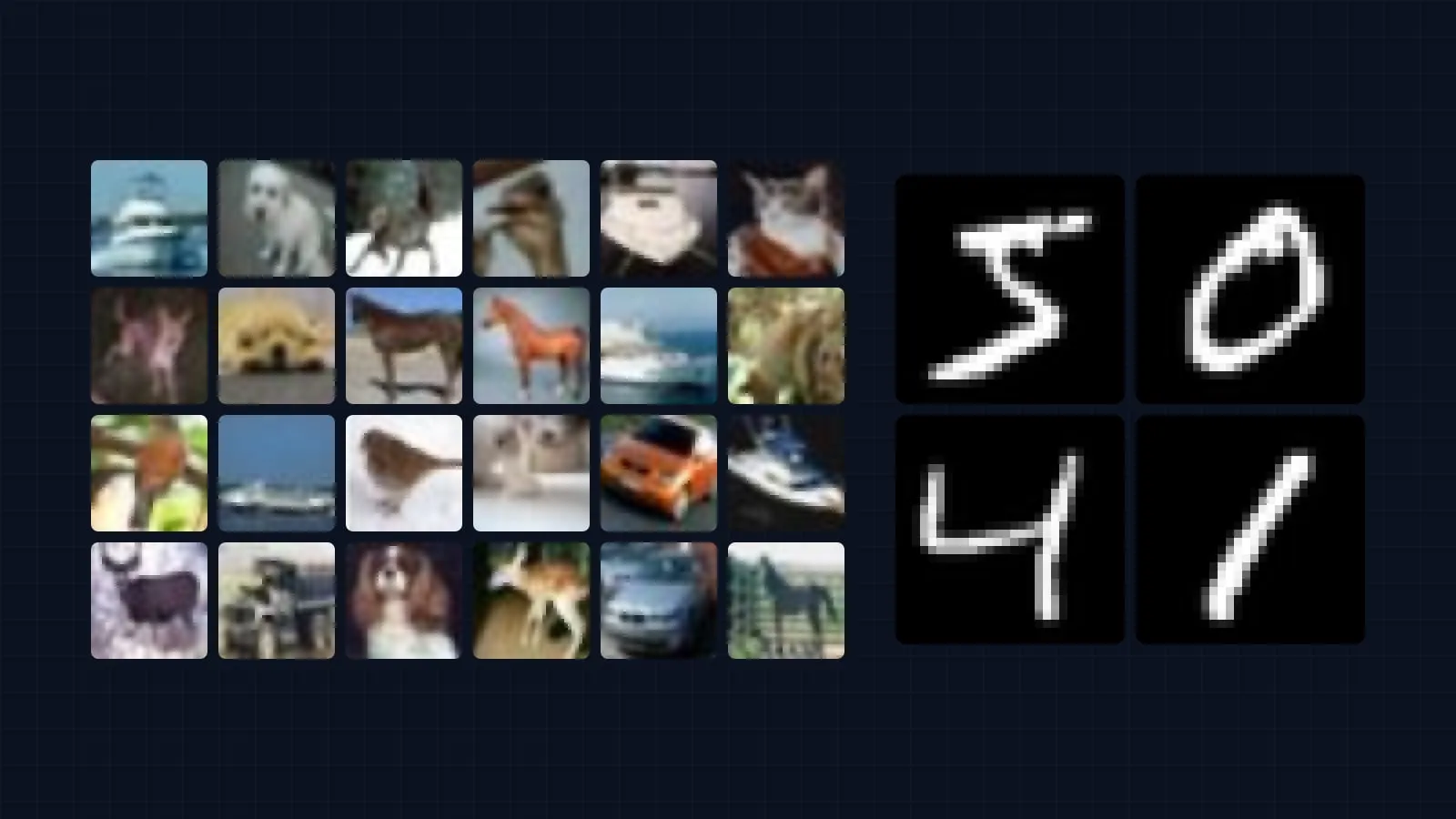
MNIST and CIFAR-10 are the two classic image classification benchmarks. The challenge here was not just reaching a number, but knowing what produces it: start from a simple model, propose improvements and measure each one’s contribution separately.
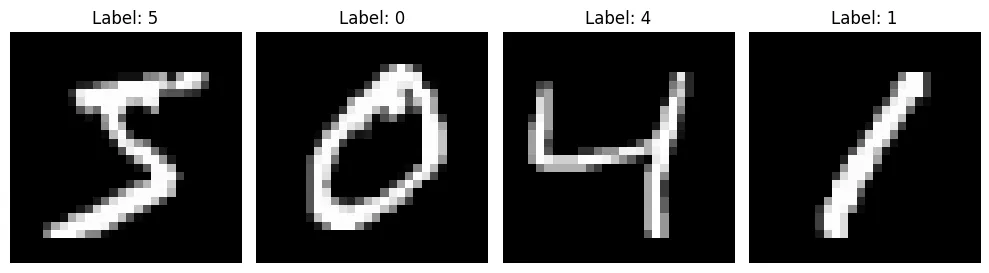
- MNIST (28 × 28 handwritten digits, 60,000 for training and 10,000 for test): beat 99.4% accuracy with no convolutional layers, using only multilayer perceptrons (MLPs).
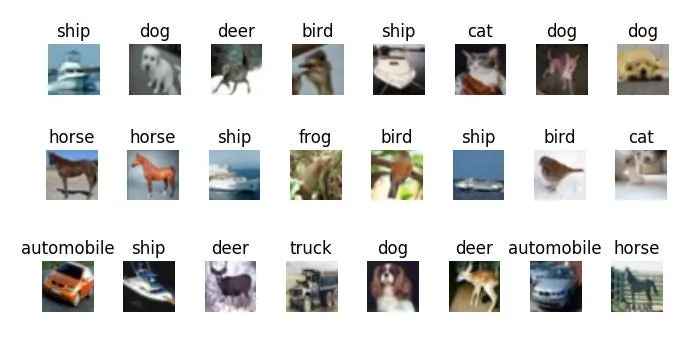
- CIFAR-10 (32 × 32 colour images in 10 classes, 50,000 and 10,000): beat 92%.
 View full-size image
 View full-size image
My contribution
Solo project: I designed the architectures and data augmentation pipelines, implemented them in PyTorch, ran the 11 experiments (100 epochs each) and documented each study in a technical report.
Technical approach
MNIST: an MLP that behaves like a modern network
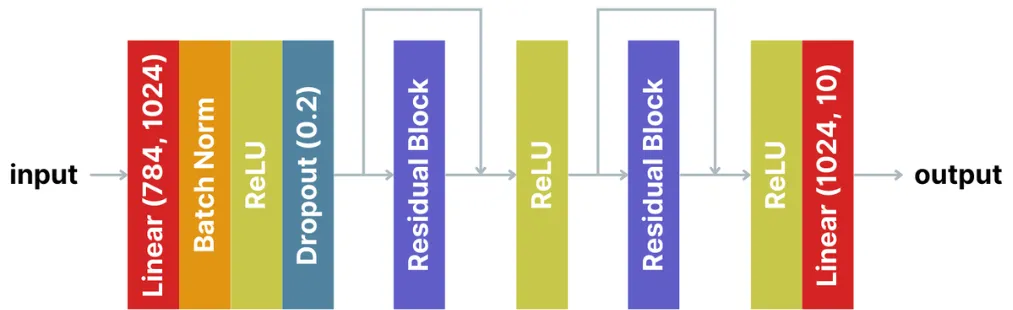
The baseline is a four-layer MLP (784 → 1024 → 1024 → 1024 → 10) with ReLU. On top of it I proposed two independent changes:
- Architecture (model B): batch normalisation, 20% dropout and two residual blocks of 1024 units, like a ResNet’s but with linear layers.
- Data augmentation: mild rotations (±10°, so that 6 and 9 are not confused), 10% translations and scaling, elastic deformations that mimic natural variation in handwriting, and Gaussian noise.
 View full-size image
CIFAR-10: three architectures, data augmentation and a scheduler
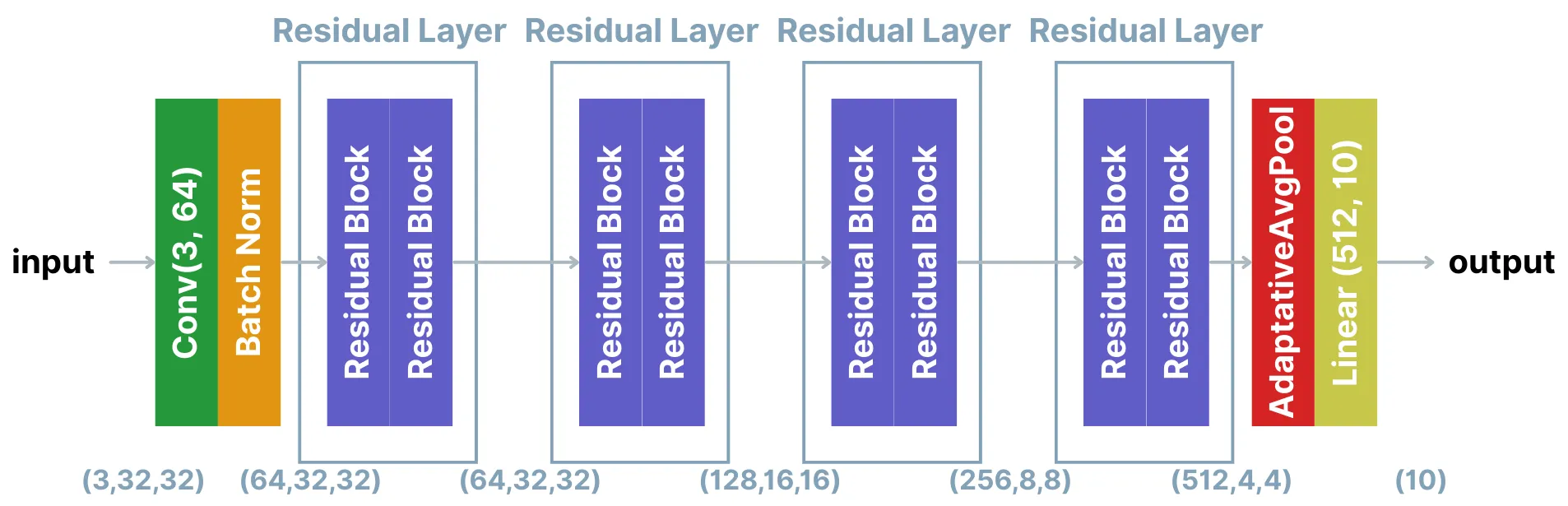
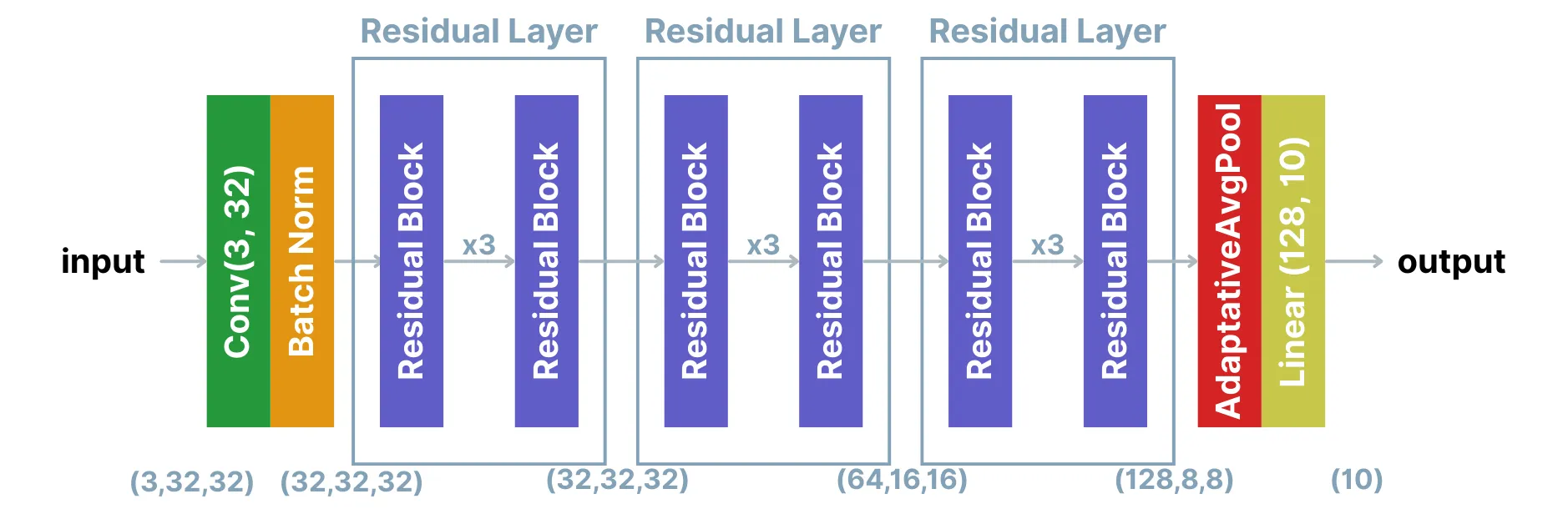
The baseline is a simple CNN with five convolutional blocks (32 → 512 channels) and no data augmentation. I compared three architectures implemented from scratch and two training improvements:
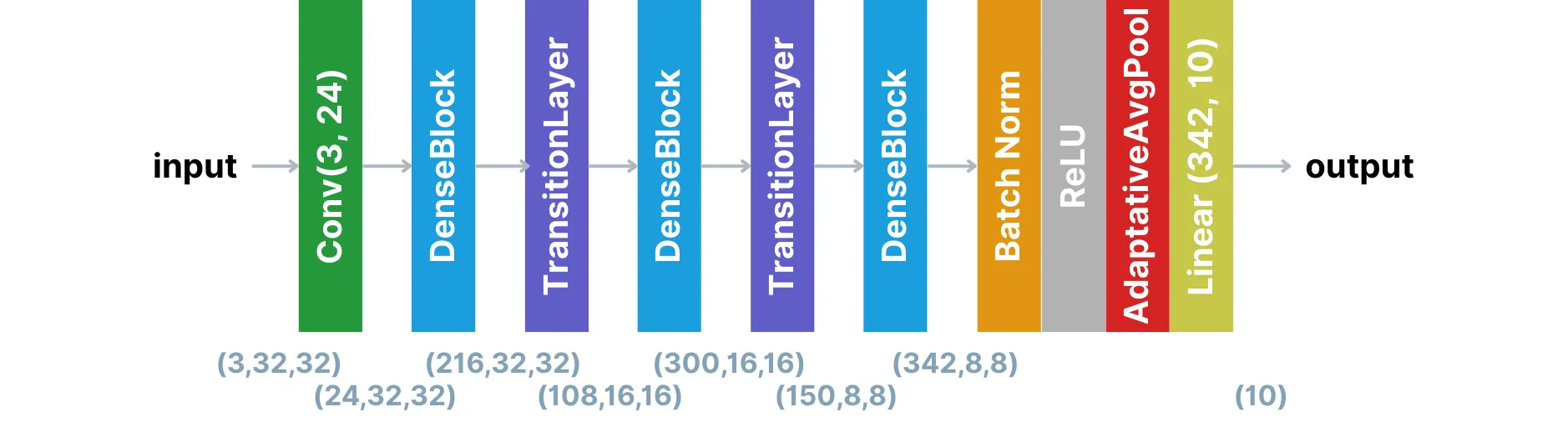
- ResNet-18, WideResNet-32 (wider and shallower) and DenseNet-100: three dense blocks of 16 layers in which every layer receives the outputs of all the previous ones.
- Data augmentation: random crops with 4 px padding, horizontal flips and random erasing, which masks parts of the image so the model cannot rely on a single detail.
- Training: a cosine learning-rate scheduler and stronger weight decay (5 × 10⁻⁴).
 View full-size image
 View full-size image
 View full-size image
The key piece of DenseNet is the dense layer: instead of adding the input like a ResNet, it concatenates it, so every layer reuses all previous features with very few new parameters.
# CIFAR/CIFAR.ipynb — dense layer (growth_rate = 12)
class DenseLayer(nn.Module):
    def __init__(self, in_channels, growth_rate):
        super().__init__()
        self.bn = nn.BatchNorm2d(in_channels)
        self.relu = nn.ReLU(inplace=True)
        self.conv = nn.Conv2d(in_channels, growth_rate,
                              kernel_size=3, padding=1, bias=False)

    def forward(self, x):
        out = self.conv(self.relu(self.bn(x)))
        # Concatenate instead of add: every layer sees all previous ones
        return torch.cat([x, out], dim=1)
Results
- Baseline98.31%
- Model B98.83%
- Data augmentation99.40%
- Model B + data augmentation99.47%
Scale from 98.0% to 99.5%
On MNIST, data augmentation matters more than architecture: on its own it already reaches the target (99.40%), while model B adds half a point. Together they reach 99.47%. That looks small, but test errors drop from 169 to 53 images: three times fewer.
- Baseline (simple CNN)82.20%
- ResNet-1885.45%
- WideResNet-3286.45%
- DenseNet-10089.40%
- CNN + data augmentation87.82%
- CNN + cosine scheduler82.53%
- DenseNet-100 + data augmentation + scheduler93.87%
Scale from 80% to 95%
On CIFAR-10, by contrast, architecture contributes the most: DenseNet-100 gains 7.2 points with 1.05 M parameters, fewer than the baseline CNN (1.84 M) and ten times fewer than ResNet-18 (11.2 M), which stops at 85.45%. Data augmentation adds 5.6 points to the baseline CNN; the scheduler alone, only 0.3. Everything together reaches 93.87%, almost two points above the target.
Evidence
- Repository with the notebooks for the final model and the ablation on each dataset, including all training outputs.
- Technical reports: MNIST and CIFAR-10.
Professional application
- Improving a model through measurable steps instead of trial and error: knowing which component pays off before spending more compute or data.
- Choosing efficient architectures when model size or inference cost matters: here, the best model is also one of the smallest.
- Designing domain-specific data augmentation, which on its own gave the biggest jump on MNIST and more than five points on CIFAR-10.
More projects
See all projects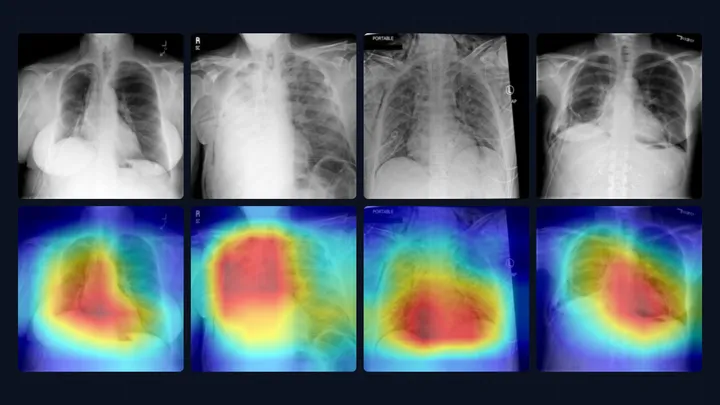
Medical Imaging
Multi-label chest X-ray classification with DenseNet-121
Detecting 14 pathologies at once in 112,000 chest X-rays, with an asymmetric loss, per-pathology calibrated thresholds and Grad-CAM++ to audit the model.
Medical Imaging
Melanoma segmentation with U-Nets built from scratch in PyTorch
Two U-Nets coded from scratch to outline skin lesions: one trained from scratch and one with a frozen pretrained ResNet-50 encoder.